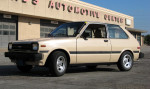
Interest in the Toyota Starlet began after rolling the Mitsubishi Starion down to the 2005 Japanese Classic Car Show. Seeing a few restified examples of the mighty KP61 on the lawn, followed by a stripped out Starlet junkyard reminder had the hatchback added to the car want list. The 1982 Starlet seen here was found in the local Recycler, and purchased for a cash price of 300 dollars. A ride over on a bicycle with cash in pocket, a walk back to the car from the parts house with an econo-battery, and the Starlet was driving home to Montrose with bike in hatch. The Starlet is shown here a few years back in Huntington Beach, California wearing a set of junkyard-scrounged 13-inch US INDY slot mags. These wheels were rescued on half-price day from a ’70s Toyota Corolla SR5 liftback. As the Starlet currently serves as Clunkbucket official transport, stay tuned for all manner of maintenance, restoration, and performance-oriented mayhem featuring the Starlet as an economical model.
Archive for March, 2009
Project Starlet
Pinto Squire Wagon
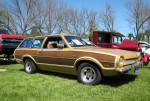
Proving that finding a classic and driving it to a car show doesn’t require a federal bailout are Steve and Tina Lencioni of Pacifica, California and their 1973 Ford Pinto Squire station wagon. Steve has owned this top-tier optioned Pinto longroof for a little over a year now after spying it in a garage as part of his travels as a roofing contractor. The previous owner wanted the car gone, and told Steve to come and get it. After a 18-year garage nap, the wagon is back on the road as the result of a deal that was essentially better than free. The Pinto has 73K original miles, features a roof rack, acres of brown vinyl and carpeting, and a set of factory aluminum slot mags for sporty style. The Pinto was a budget standout in a sea of entries, and stands as the Clunkbucket Choice from last weekend’s Goodguys Rod & Custom bonanza.
Fiat Multipla Revealed
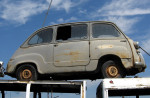
We know what you’re thinking. Please no, not the new Multipla! Fear not. We would never do that to you. As there have been a few questions about the contraptions on the header image, we dug through the Clunkbucket photo archives to solve the mystery. The tank on the left remains mysterious. It is some sort of movie car, based possibly on a Chrysler or Ford chassis judging from the Mopar cop wheels. The beauty in the middle is a Honda AN600. The glorious machine on the right is the modern Fiat Mutlipla shown here. The versatile Fiat 600-based Multipla came in four, five, and even six-seat versions. With a four-pot rear mounted engine driving the rear wheels, the Multipla boasted a top speed of nearly 60 miles per hour. Back in the Los Angeles days we used to spend quite a bit of time down in Sun Valley at the Aadlen Bros, whose surrounding walls are crowned with interesting rides like this spawn of Topolino.
More: 1960 Fiat Multipla from the Microcar Museum
LeMon of the Week
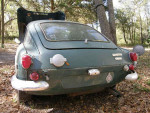
Last week we explored the infinite joy inherent to all French LeMons race cars. Today we hop the Chunnel and head to the land of boiled monkfish, Joe Lucas, and the birthplace of this 1969 Triumph GT6 MkII – jolly old England. Known to hopeless, bloody knuckled types the world round as the “poor man’s E-type,” the MkII was able to cough up a stunning 104 hp for the 12 days between leaving the dealer and it’s first scheduled maintenance. We figure that this particular British racing green little devil will make substantially less. But that’s OK, because you’ll be lightening the GT6 for the race, right? The good news is the Triumph is way ahead of you. “There is rust in the floorboards really bad and on the passenger side you can see the ground”, claims the current owner. Plus, is there a man alive that doesn’t love SU carburetors? Fun fact: SU stands for Skinner Union, and before they started making carbs they made… toilets! [flush that - those are Strombergs. See correction from Jay Lamm below - ed] And the Triumph’s price couldn’t be righter — just $500. Do you smell what Judge Jonny smells? A sure fire winner! Cheers to the miscreants heroic racers that make up the 24 Hours of LeMons forum (and their leader, Loren) for finding this future nickels-winning treasure.
Disclaimer: A mild mannered motoring journalist by day, Jonny Lieberman dons the robe and econo-barrister wig as Judge Jonny on the 24 Hours of LeMons racing circuit. Together with Justice Murilee Martin they comprise the LeMons Supreme Court.
Tool of the Week
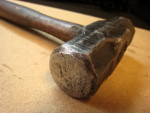
Let us be be the first to admit that the Clunkbucket garagelet is currently in disarray. In an effort to tidy things up and deliver a reasonably steady supply of semi-useful and entertaining content, we are proud to present the very first Clunkbucket Tool of the Week! This five-pound short handle sledge hammer was an early addition to the Clunkbucket arsenal of tools, and has served well in various garages and wrecking yards for over 15 years. The sledge hammer is not used often, but is without equal when it comes time to separate tie-rods from steering knuckles, or help convince without finesse any part worthy of a solid blow. The short handled sledge hammer is a welcome and useful addition to any shop or awesome set of tools.
Check Your Oil
Early horseless carriages had no oil containment system whatsoever. These contraptions deposited used oil directly onto the ground as drivers twirled handlebar mustaches. Modern automobiles boast completely self-contained oiling systems, but still require that the driver check the level every now and again to prevent the engine from tearing itself up.
Of all the fluids contained in an automobile, oil is absolutely crucial to the survival of your engine. A thin layer of oil molecules rides between moving internal engine parts. These molecules prevent heat-producing friction from destroying your engine in short order. Keeping an eye on your engine oil level is as important as it is simple. Read on to see how.
Long Roof is Long
From the flagship of the fleet department comes the finest in American family wagons. Why? Because we really don’t know of anyone else who tears into the absolute largest of fusty old Mopar station wagons and transforms them into ridiculously fast drag machines at a more alarming rate than Gaffo Jones from Wagons of Steel. Mr. Jones has been up to this sort of mayhem for a while – from the original Mighty Josephine in the mid-nineties up to a NHRA Division 6 Plymouth Belvedere long roof currently on nationwide tour. For more of exactly what it takes to get heavies like this monster moving down the quarter mile in the 10-second range head on over to Wagons of Steel, or read on Gaffo’s ramblings over at Mopar Max.
Pug and Puppy

Behold this 1942 Ford COE Rollback with a 7.3-liter diesel Ford and Gale Banks supercharger. There’s a 4.11 Dana 70 Posi rear end, too. Did we mention working AC? But, like most children, we’re just enamored by the paint job. Jack Safro and his family referred to this good looking hauler as the Pug. Here’s a little background info on Jack:
Bumper Car Escapes Midway
While this may appear to be some sort of photographic trickery, the bumper car shown here is actually moving under its own power. The man behind the wheel restored this genuine midway-style bumper car, and installed a small gasoline engine in place of the original electric motor. Paul claims a blistering top speed of 25 miles per hour. If the cadre of super scientists could figure out a working wireless electrical power transmission network, one could re-install a more powerful electric motor and hit the accelerator down the Nikola Tesla high velocity electric motorway.
So Neat They Are

When most folks hear “Saab Sonett,” their thoughts immediately turn to handsomely awkward fiberglass FWD coupes racing to 60 mph in 12.5 seconds flat thanks to a Ford sourced V4 engine. But that’s the mid-60s Sonett II. This friends, is the OG Swede racer aka the Sonett I. Desinged in a barn near Trollhättan by four guys named Rolf, Sven, Gotta and Olle (really), the Sonett was firt shown to the world in March of 1956 at the Stockholm Bilsalong (auto show). The plan called for 2,000 Sonetts in 1957. Sadly, the world at large wasn’t ready for a 1,300 pound Swedish roadster powered by a 57 hp two-stroke 748 cc three-banger, as only six Sonett I roadsters were ever built. But at least there were six. The Sonett’s name came from the Swedish, “Så nätt den är.” So neat they are, indeed. [photo Martin Bergstrand]