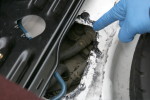
As most all of us have discovered when the tank ran dry, an engine requires fuel to run. As this fuel is flammable and generally explosive, it is kept in a tank away from the combustive action going on inside the engine. This setup presents the problem of how to get the fuel from the tank to the carburetor or fuel injectors that feed the engine fuel. Enter the fuel pump. The … [Read more...]
Archives for May 2009
Tool of the Week: Magnetic Tray
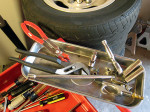
From the tools that support the use of other tools department comes this week's featured tool of the week - the magnetic tool and parts tray. While there are dozens of different shapes and styles of this useful shop item, the simple yet effective concept is one that works as it should. Magnets attached to the bottom of the tray keep wrenches and errant nuts, bolts, and other … [Read more...]
Tatra 603 Breakfast

Getting to breakfast in the City of Angels most likely always includes travel by automobile. On a recent trip to Los Angeles, the Clunkbuckets arrived for ham and eggs Politburo-style in a 1970 Tatra 603. The delicious breakfast came hot off the griddle at Nicks. Transportation was supplied by Paul Greenstein and his other privately-owned Tatra sedan. Most Tatra 603's came in … [Read more...]
Enduro Dirt Mayhem

The rules spelled out to the drivers and crew before the running of the Crash Nationals were simple. No drinking of any alcohol, and don't leave any junk in the pits. This junk included destroyed cars. The race? 200 laps. No breaks. No yellow flags. Fire - was the only thing that would get you and your car towed off the dirt oval. Breaking down in the middle of turn three meant … [Read more...]
Tool of the Week: Flare Nut Wrench
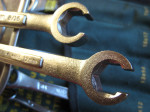
There are moments in the do-it-yourself automotive world where one truly wishes something didn't just happen. One of the more famous of such moments is stripping out or rounding off a fuel or brake line fitting. Finding out that these fittings are often made of a softer metal the hard way is not fun. Since these fittings are captured by the flare on the steel line or tube … [Read more...]