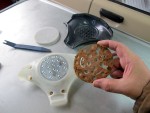
Modern and more luxurious cars than the 1982 Toyota Starlet have equally modern conveniences such as self-parking guidance systems and electrical windows. The Starlet has a small high-impact plastic crank that is turned to open and close the window. The plastic crank is attached to a simple and durable device known as the window regulator. The window is in turn attached to one arm of the scissor-like regulator. Turn the crank clockwise and window goes down. Counter clockwise and window goes back up. Presto. The window regulator is one of those things like a refrigerator, that you never think too much about until it quits. Removing and replacing a broken window regulator is one of the most reviled tasks in all of old or classic car ownership and maintenance. In older econoboxes like the Starlet, just finding the working replacement part can be an adventure in itself.
Read the rest of this entry »
Archive for the ‘Car Care’ Category
Replace Window Regulator
Tool of the Week: Nut and Bolt Gauge
In a time before nuts and bolts were packaged into useless plastic bags in never correct quantities, gathering fasteners was as easy as heading down to your auto parts or hardware store and just asking for a dozen M8 45 millimeter exhaust studs with a 1.25 thread pitch and matching copper pinch nuts. While there are some auto parts joints and fastener suppliers that still operate this way, many more have gone down the dark path of plastic bags and blister packs. As knowing is half the battle when it comes to finding the right fastener, the nut and bolt measuring gauge or screw checker is an indispensable item to have in the garage or pocket. The nut and bolt gauge also comes in handy when aluminum treads unscrew right along with the with the stud or bolt. After swearing up a storm and peeling away the aluminum, knowing exactly which Heli-Coil® or screw thread insert to get is foolproof thanks to the nut and bolt gauge. The good news is that some of the places that will still give you a brown paper lunch bag full of nuts and bolts will usually supply a gratis nut and bolt gauge with purchase. Measure it twice. Fasten it once. Or at least until it breaks again.
Five Tips for DIY Automobile Repair
You are one of the intrepid few that revel in the satisfaction of fixing automobiles yourself. You enjoy building things no matter the cost or even unfortunate result. While that unintentionally cubist home made book shelf in the living room may lean more towards Braque than Picasso, it represents a valuable lesson learned for the next square and far more rectangular mid-century appearing book shelf. Knowing a few lessons learned the hard way by others can help win at least half the battle when it comes to working on things with engines and more than two wheels. Read the rest of this entry »
Tool of the Week: Battery Charger
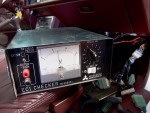
Dividing the number of times a tool is used into its own utility makes the battery charger one of the best long-term investments for the absent minded and forward thinker alike. Since the basic design and chemistry of a lead-acid automobile battery haven’t changed all that much since the days of Charles F. Kettering, the old battery charger is a tool that is often used for many years before getting passed onto the next generation. The official Clunkbucket battery charger was picked up over three cars and four motorcycles ago, and has never failed in in its ongoing task putting the juice back into the cells.
Read the rest of this entry »
Radiator Replacement Season
Roasting days mark the unofficial beginning of summer radiator replacement season. One can see the season’s early victims on the first wicked hot weekend of the year. There they stand on the side of the road holding up their hoods while their cooling system makes like a steam engine. This mighty 1969 Dodge Polara did not overheat, but did do something equally unacceptable. While ascending the infamous I-5 Grapevine with four people and the air conditioning on full meat locker setting, the Dodge heavy put the 383 big-block into the slightly hot zone. The solution was clear. Full radiator replacement and upgrade. Read the rest of this entry »
Tool of the Week: Wood
From the back to nature desk of our renewable resource and sustainability division comes one of the more versatile and useful items in the Clunkbucket Arsenal of Tools. Wood. Countless blocks, lengths, or chunks of wood make it onto the tool carts and work benches of the world as proof that necessity is the mother of invention. Can’t get the car high enough with the floor jack? Block of wood on top of the jack. No parking brake? No problem! Wooden wheel chock. Firewood works especially well in this case for those so equipped. Seal driver kit not equipped with a big enough round to seat the rear main seal on a Mitsubishi Astron engine? Precision cut wood, with hammer. Battery hold down corroded to nothing? Wood wins again as an economical and corrosion free substitute. Sticky starter? A few well-placed raps with a cut-down wooden broomstick and away you go. The block of wood can be used in combination with any number of hammers for non-marring blows or convincing of fancy-finish parts into the right place. Wood used to keep Revolution four-spoke wheels from rolling into the neighbor’s expensive land yachts during cleaning, prevents unwanted litigation, and pays for itself a million times over. Any worthwhile tool cart or box carries wood of varying shapes and sizes collected from the light bulb moments of mechanical genius. As we’re certain there are myriad uses for wood not mentioned here, additional applications of wood for automotive repairs and/or parts are welcomed in the comments.
Thrifty use of wood as a battery hold down.
Tool of the Week: Super Straight Edge
As we approach the beginning of Mitsubishi Astron engine rebuilding season, it is time for the first in a series of tools that can help get the job done. A quality step in transforming a salvaged engine block into a working short block is checking the deck for flatness. One might think they could lay any old reasonably straight thing across the deck and mark it good, but unblown head gaskets on boosted engines depend on a perfectly flat deck. Measuring this kind of flat requires not just any straight edge, but a super straight edge – machined super straight. There is little room for error. The standard value of deck flatness on the G54B Astron turbocharged engine is 0.0020 inches, with a limit of 0.0039 inches, or one tenth of one millimeter. Checking for flatness requires a super straight edge and the right thickness of feeler gauge. Run the super straight edge across the deck in as many X and H patterns as possible, and see if the feeler gauge goes under the edge at any point. Looking close for any cracks at this time is also a good idea. The super straight edge is also useful for measuring flatness of intake and exhaust manifold surfaces, oil pump gear clearances, and countless other things where flat must be wicked flat. While you might be able to get away with using a belt sander and a vice to get that old Alfa Romeo exhaust manifold surface flat, this same method is not advised for engine block decks. Support your local machine shop to fix warped decks. Listening to SS Decontrol or Minor Threat and using the super straight edge is OK, but using that old McMetrics conversion ruler you picked up from the McDonalds in 1973 as a super straight edge is not.
The Super Straight Edge shown here came from Proform Tools, who were instrumental in the production of this edition of Tool of the Week.
Remove and Replace an Alternator
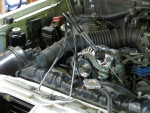
One of the great unanswered questions of long-term automobile ownership is the mystery of the alternator. If the collective automotive powers can design and manufacture a car as complex and modern as the Oldsmobile Toronado Trofeo, it would seem but a minor detail to install a bulletproof alternator under every hood. Why automakers cannot produce this alternator that serves in usefulness for the life of an automobile is a vexing question that may remain forever unanswered. A charging system failure results in one of the more common automotive repairs. Removing and replacing a bad alternator. Early symptoms of a spent or malfunctioning alternator are dimming headlights or sluggish electrical accessories after dark. Positive proof of a dead alternator or charging system gone haywire is a sad click-click-click, or no sound at all from the starter when you turn the ignition key. While replacing an alternator is a usually a simple remove and replace operation, it is good practice to test the charging system as a whole before throwing perfectly good money and time away.