Friday, May 18, 2012

CLUNKBUCKET

Everything but the same old cars

Archive for the ‘Project Buckets’ Category

Compression Test

Posted by Mike Bumbeck On June - 11 - 2009

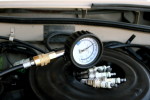
compression_testThe way Clunkbucket learned about how and why to run a compression test on an engine came only after bolting almost every conceivable replacement part onto a 318 V-8 in a 500-dollar ’67 Plymouth Barracuda. Only after a compression test was it determined that the engine was closer to a V-5 than a V-8. As Foghorn Leghorn often trumpeted, there’s a right way – and there’s a wrong way. Running a compression check only after replacing perfectly good carburetors and everything other engine related part is the wrong way. Running a compression test is one good way to see what’s going on inside an engine without talking it apart. Read the rest of this entry »

Replace Fuel Pump

Posted by Mike Bumbeck On May - 29 - 2009

fuel_pump_leadAs most all of us have discovered when the tank ran dry, an engine requires fuel to run. As this fuel is flammable and generally explosive, it is kept in a tank away from the combustive action going on inside the engine. This setup presents the problem of how to get the fuel from the tank to the carburetor or fuel injectors that feed the engine fuel. Enter the fuel pump. The fuel pump draws fuel from the fuel tank and delivers enough to the engine to keep things moving.

When cars used carburetors, the fuel pump was usually a mechanical deal bolted up to the side of the engine. Carburetors are now about as common as console black and white console televisions with built in hi-fi phonograph and stereophonic sound. Fuel injection is the fuel delivery standard. A modern fuel pump is capable of maintaining the pressure and flow required by the electronic fuel injection system, itself powered by electricity created by the alternator. If the fuel pump quits? Game over.

Step-by-Step Gallery with E-Z Captions

Read the rest of this entry »

Jack and Stands

Posted by Mike Bumbeck On May - 21 - 2009

jack_stands

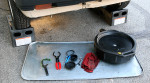
Working on any car sometimes involves getting safely underneath to spin wrenches, or swing hammers. A floor jack and jack stands are the right tools for the job when it comes time to working on an automobile with more than one of its wheels removed. Choosing the right floor jack and jack stand set depends on the weight of your automobile. There’s no need to get a 12-ton set if you drive a 1982 Toyota Starlet. Conversely, an economy stamped steel 1-ton set won’t hold up a full-size pickup or SUV. Ground clearance, or lack of it, is another factor. Low-profile floor jacks will squeeze under most stock body cladding. A set of ramps are the answer for getting the floor jack under super low rides.

Step-by-Step Gallery with Bonus Captions

Read the rest of this entry »

Project Starlet

Posted by Mike Bumbeck On March - 31 - 2009

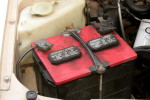
toyota_starletInterest in the Toyota Starlet began after rolling the Mitsubishi Starion down to the 2005 Japanese Classic Car Show. Seeing a few restified examples of the mighty KP61 on the lawn, followed by a stripped out Starlet junkyard reminder had the hatchback added to the car want list. The 1982 Starlet seen here was found in the local Recycler, and purchased for a cash price of 300 dollars. A ride over on a bicycle with cash in pocket, a walk back to the car from the parts house with an econo-battery, and the Starlet was driving home to Montrose with bike in hatch. The Starlet is shown here a few years back in Huntington Beach, California wearing a set of junkyard-scrounged 13-inch US INDY slot mags. These wheels were rescued on half-price day from a ’70s Toyota Corolla SR5 liftback. As the Starlet currently serves as Clunkbucket official transport, stay tuned for all manner of maintenance, restoration, and performance-oriented mayhem featuring the Starlet as an economical model.

Check Your Oil

Posted by Mike Bumbeck On March - 25 - 2009

oil_leadEarly horseless carriages had no oil containment system whatsoever. These contraptions deposited used oil directly onto the ground as drivers twirled handlebar mustaches. Modern automobiles boast completely self-contained oiling systems, but still require that the driver check the level every now and again to prevent the engine from tearing itself up.

Of all the fluids contained in an automobile, oil is absolutely crucial to the survival of your engine. A thin layer of oil molecules rides between moving internal engine parts. These molecules prevent heat-producing friction from destroying your engine in short order. Keeping an eye on your engine oil level is as important as it is simple. Read on to see how.

Read the rest of this entry »

Starions-a-Plenty

Posted by Mike Bumbeck On March - 10 - 2009

Mitsubishi StarionWhile not quite the usual sub 500-dollar car, the Starion will be an omnipresent  and endlessly ongoing project here at Clunkbucket. Purchased back in 2004 as a replacement for an Evo8 that was garnering way too much attention from the authorities, the Mitsubishi Starion (aka Chrysler Conquest) has been a source of both enjoyment and frustration over the last few years. Keeping 25 year old machines running is fun enough. Making them go faster or handle better makes for even more entertainment. We’ll share what we’ve learned along the way.

Tool of the Week: Fiat SST

Posted by Mike Bumbeck
Sep-3-2010 I 1 COMMENT

Replace Window Regulator

Posted by Mike Bumbeck
Aug-28-2010 I 1 COMMENT

Five Tips for DIY Automobile Repair

Posted by Mike Bumbeck
Jul-21-2010 I 8 COMMENTS